SB 1.18.30
TEXT 30
|
TEXT
स तु ब्रह्मऋषेरंसे गतासुमुरगं रुषा ।
विनिर्गच्छन्धनुष्कोट्या निधाय पुरमागतः ॥ ३० ॥ sa tu brahma-rser amse
gatasum uragam rusa
vinirgacchan dhanuskotya
nidhaya puram agatah
sah-the King; tu-however; brahma-rseh-of the brahmana sage; amse-on the shoulder; gatasum-lifeless; uragam-snake; rusa-in anger; vinirgacchan-while leaving; dhanuh-kotya-with the front part of the bow; nidhaya-by placing it; puram-palace; agatah-returned.
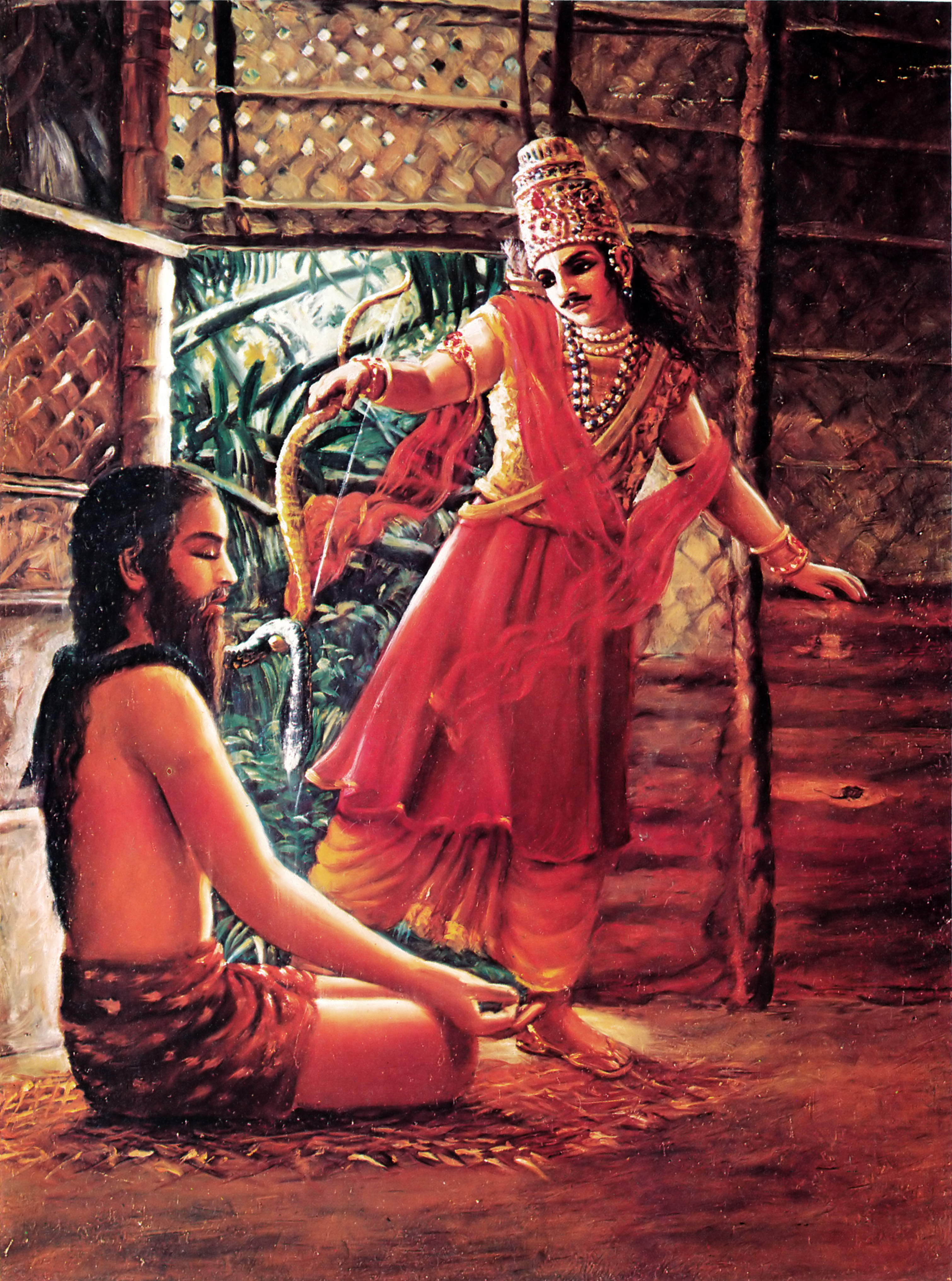 Maharaja Pariksit, not receiving the amenities of a formal welcome considered himself neglected, and so thinking, he became angry. Thus, while leaving the hermitage, the King picked up a lifeless snake with his bow and angrily placed it on the shoulder of the sage. Then he returned to his palace. TRANSLATION
While leaving, the King, being so insulted, picked up a lifeless snake with his bow and angrily placed it on the shoulder of the sage. Then he returned to his palace.
PURPORT
The King thus treated the sage tit for tat, although he was never accustomed to such silly actions. By the will of the Lord, the King, while going away, found a dead snake in front of him, and he thought that the sage, who had coldly received him, thus might be coldly rewarded by being offered a garland of a dead snake. In the ordinary course of dealing, this was not very unnatural, but in the case of Maharaja Pariksit's dealing with a brahmana sage, this was certainly unprecedented. It so happened by the will of the Lord.
|